Sometimes buying wine is easy sometimes its a problem to choose the correct wine.
You walk into a shop, see a bottle you know, pay for it, and leave like a boss, confident in your decision!
or you stand in front of the wine shelf for ten minutes, holding two bottles you like, in a similar price range, and guessing which bottle will be the better choice.
That second version is usually me.
I wanted to buy a nice bottle of white wine to celebrate finishing a successful app project. Just a small reward. I was drawn to a German white because of my last blog post where I learned that Germany has such good white wines that they can even distort a comprehensive data analysis. I found myself choosing between two German white wines from the Mosel region. Same producer, similar price, both looked good — but they were from different vintages.
One bottle was from 2022.
The other was from 2024.
That is exactly the kind of situation where WineWetterWelt becomes useful.
With two similar bottles it take 10 minutes of guesswork to choose the correct wine
When you are not a wine expert, a wine shelf can be surprisingly annoying. One consumer study reported that almost one-quarter of wine buyers feel overwhelmed by the sheer number of choices on store shelves.
The label can tell you many things, the producer, the region, the grape variety. Doesn’t mean that these things are helpful for you to know as a wine beginner. But the label tells you them and your intuition can make two bottles look equally good.
The difficult question is:
Which wine will taste better?
When you are just left with your gut feeling you should ask the data. That is why I made WineWetterWelt.
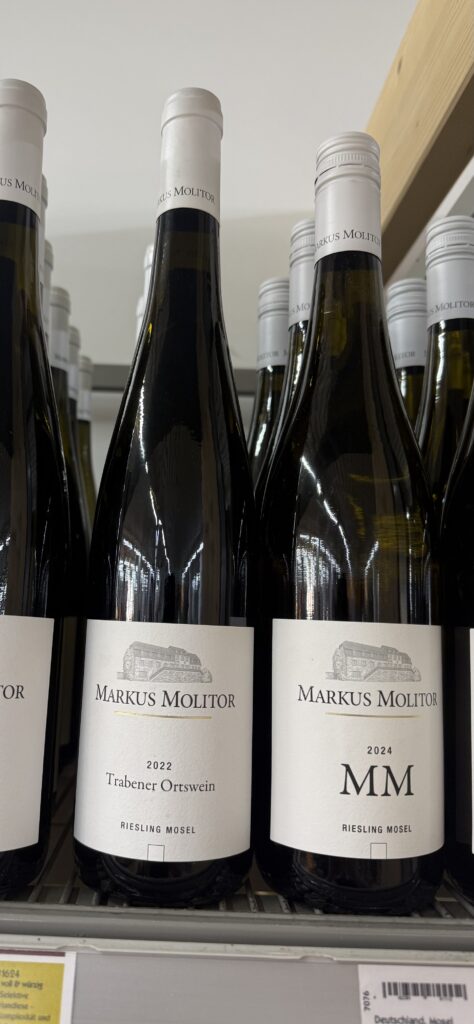
How I used WineWetterWelt in the shop
I opened WineWetterWelt and entered the relevant information:
Country: Germany
Region: Mosel
Wine type: White
Vintage: 2022 and 2024
The website gave me a weather-based score for both vintages.
In this case, the 2022 vintage received a score of 6, while the 2024 vintage received a score of 5.
That score difference of 1 point was all I needed.
So I bought the 2022 bottle.
Decision made. No more staring at the shelf like I was trying to read a book at a bookstore without paying for it.
Did it work?
Yes!
The wine was great. What I liked most was the sweet, slightly floral smell. It had that charming, rosy aroma that makes a good white wine feel like a gift.
This kind of everyday buying decision, the website did exactly what I wanted it to do:
It helped me choose between two bottles that otherwise looked almost identical. I am confident that this has saved me 10 minutes that day.
Why weather data can help to choose the correct wine
Wine is strongly influenced by weather.
Temperature, rainfall, late-season conditions and regional climate can affect how grapes ripen. That does not mean weather explains everything. It does not. But it can provide useful context, especially when comparing different vintages from the same region.
WineWetterWelt uses weather data and statistical modelling to create a vintage score. The idea is not to replace tasting notes, expert opinion or your own preferences. The idea is to add another layer of information.
A practical one.
When you are in a wine shop, you usually do not need a long scientific discussion. You need a quick answer to a simple question:
Which of these two bottles is probably the better choice?
That is where a weather-based vintage score can help choose the correct wine.
Try it next time you buy wine
The next time you are standing in front of a wine shelf and cannot decide between two similar bottles, try using WineWetterWelt.
Choose the country, wine type, region and vintage, then compare the weather score.
It only takes a few seconds.
And maybe it saves you from spending ten minutes in front of the wine shelf pretending you are “just looking.”